Erosion Control for General Contractors in North Carolina: A Field Guide to Staying Compliant
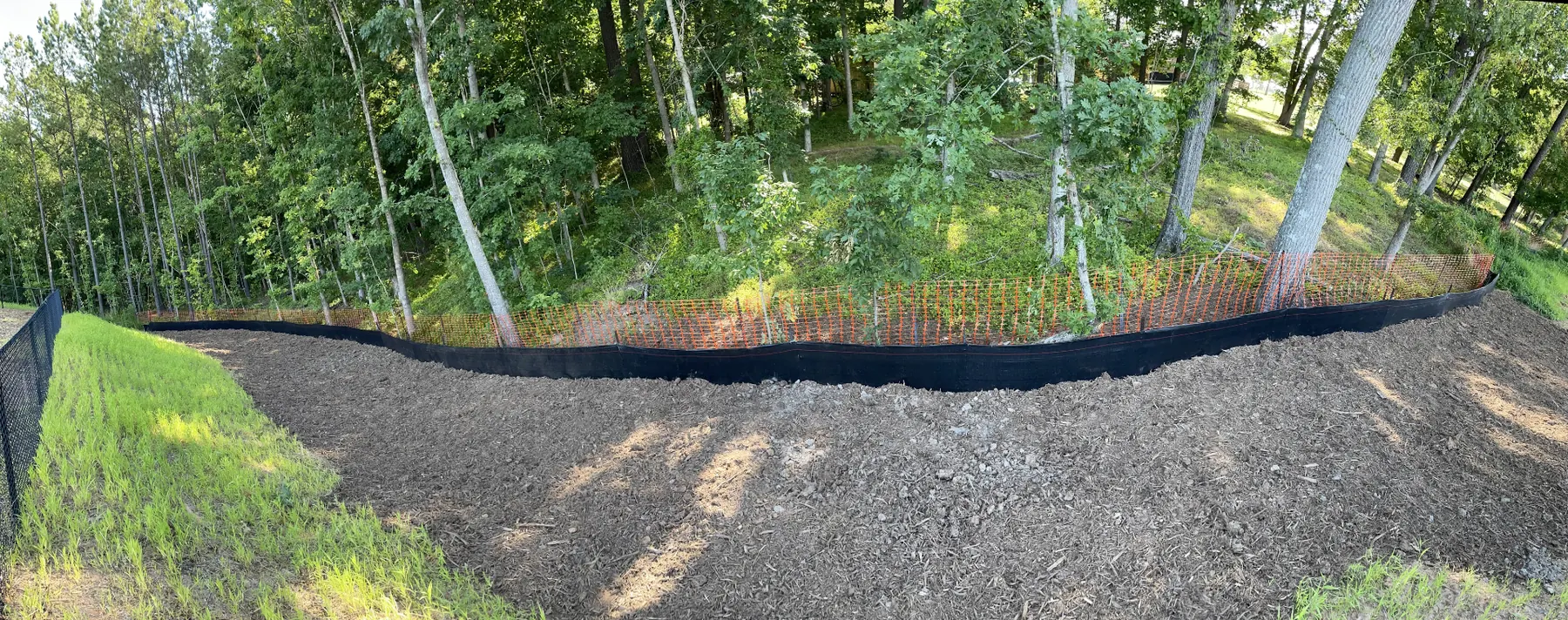
Every general contractor in North Carolina knows the feeling: the schedule is tight, the team is moving, and then a single erosion control detail holds up the whole site. A leaning silt fence, a channel that never got matted, sediment tracking onto the road. None of it is complicated on its own, but together it is the difference between a passed inspection and a stop-work conversation.
This guide breaks down what erosion and sediment control actually means on an active construction site, what inspectors are looking for, and where a specialized subcontractor saves you time and money.
Why erosion control is a general contractor problem
On paper, erosion control is an environmental requirement. In practice, it is a schedule requirement. Uncontrolled runoff carries soil and sediment off your site and into storm drains, streams and neighboring properties. That triggers violations, failed inspections and, worst of all, rework at the exact stage of the project where you have the least time to spare.
The general contractor carries the responsibility for the whole site, but erosion and sediment control is specialized field work. Most GCs are not set up to install and maintain silt fence, matting, wattles, rip-rap and drainage measures at the pace an active site demands. That is why erosion control is one of the most commonly subcontracted scopes in North Carolina construction.
What inspectors actually look for
Requirements vary by jurisdiction, but the fundamentals are consistent. Inspectors want to see that the site is doing three things: keeping soil in place, keeping sediment from leaving the site, and controlling the way water moves across disturbed ground.
That usually comes down to a checklist like this:
- Perimeter control is intact. Silt fence and sediment barriers are trenched in, upright, and not undermined or overtopped.
- Inlets are protected. Yard inlets and storm drains have functioning protection so sediment does not enter the stormwater system.
- Slopes are stabilized. Disturbed slopes are covered with matting, seeding, sod or another approved measure before they erode.
- Channels and outlets handle flow. Concentrated flow areas have matting, rip-rap dissipaters or other energy-dissipating measures so water does not cut the ground.
- The construction entrance is working. A stabilized entrance keeps mud and sediment from tracking onto public roads.
- Measures are maintained. Everything installed is still doing its job after the last storm, not clogged, collapsed or blown out.
The theme across all of it is maintenance. A measure that passed last month can fail after one heavy rain. Inspectors know this, and they check for it.
The measures that matter most
You do not need every product in the catalog on every site. You need the right combination for the ground conditions, the slope, and the way water moves. A few of the workhorses:
Silt fence. The backbone of perimeter sediment control. It only works when it is trenched in correctly and maintained, which is exactly where rushed installs fail.
Erosion control matting and blankets. These hold soil and seed on slopes and in channels while vegetation establishes. Double net matting, coir matting and similar products are matched to the slope and flow they need to survive.
Wattles and check dams. Used to slow water in channels and swales, reducing the velocity that causes erosion in the first place.
Rip-rap dissipaters. Stone placed at outlets and high-flow areas to break the energy of concentrated water so it does not scour the ground downstream.
Inlet protection. Physical protection around yard inlets and drains that keeps sediment out of the stormwater network during months of construction.
Vegetative stabilization. Seeding, sod and plantings that provide the permanent cover that ultimately stabilizes a finished site.
The best erosion control plan is the one that matches real site conditions, not a template. Slope, soil, flow and timeline all change what the right solution looks like.
Erosion control and the environment
It is easy to treat erosion control as paperwork, but the environmental stakes are real and they are the reason the rules exist. Sediment is one of the most common pollutants in North Carolina waterways. When it leaves a construction site, it clouds streams, smothers aquatic habitat and clogs downstream drainage.
Good erosion control protects the soil you are building on and the waterways around you at the same time. For developers building in and around growing communities, that environmental responsibility is increasingly something clients, municipalities and neighbors pay attention to.
When to bring in a specialist
Some GCs handle basic erosion control in-house. The trouble usually starts when the site gets complex or the schedule gets tight: a pond that needs converting, slopes that keep failing, drains that are blocked, or an inspection that is days away and the measures are not ready.
That is when a specialized erosion control and site stabilization team earns its place. A dedicated team installs the full range of measures, matches materials to field conditions, and gets the site back into a compliant, inspection-ready state without pulling your own team off the critical path.
At Delcid, this is the call we get most: a general contractor has tried to correct a problem two or three times, and it still is not fixed. We come in, diagnose the real issue, install the right solution and stabilize the area so the project can move forward. You can see examples in our recent projects.
The bottom line
Erosion control is not the glamorous part of a construction project, but it is one of the fastest ways to lose time and money when it goes wrong. Treat it as a schedule item, not an afterthought. Keep perimeter control, slope stabilization, inlet protection and your construction entrance maintained. And when a site gets ahead of your team, bring in a specialist before a failed inspection forces the issue.
If you are working on a site anywhere around Raleigh and the surrounding North Carolina counties, we are glad to take a look. A quick call is usually all it takes to figure out the fastest path to a stable, compliant site.
Have a site that needs attention?
Delcid handles erosion control, stormwater, site stabilization, landscaping and street washing across North Carolina. The fastest way to reach us is a call.