Street Washing and Construction Entrances: The Sediment Control Details That Keep a Project Moving
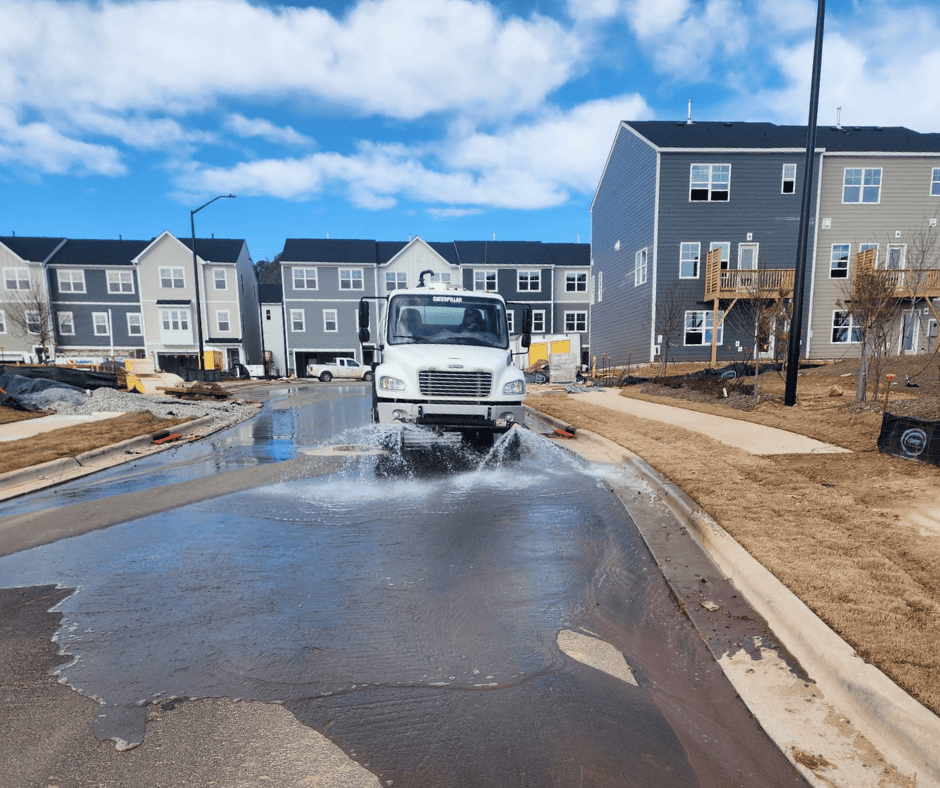
Of all the ways a construction site draws attention from inspectors and neighbors, few are faster than mud on the public road. Sediment tracked off site is visible, it is documented easily, and it points straight back to whoever is running the job. It is also one of the most preventable problems in construction, as long as two things are handled well: the construction entrance and street washing.
This is the part of sediment control that happens at the edge of your site, where the project meets the public. For general contractors and developers in North Carolina, getting it right keeps the site compliant and keeps the surrounding community on your side.
Why tracked sediment is such a big deal
When trucks and equipment leave a disturbed site, they carry soil onto the road. That mud dries, breaks down, and washes into storm drains with the next rain, carrying sediment straight into the stormwater system and local waterways. It is a direct environmental impact, and it is exactly the kind of thing erosion and sediment control rules are written to prevent.
There is a practical side too. Mud on the road is a safety hazard, a nuisance to neighbors, and a very visible sign that a site is not being managed. It is the kind of complaint that brings an inspector out and puts your project under a closer look than you want.
The construction entrance: your first line of defense
The single most effective tool for keeping sediment on site is a properly built stabilized construction entrance. Done right, it knocks the mud off tires before vehicles ever reach the pavement.
A good construction entrance is more than a pile of gravel. It involves:
- The right stone. A large, angular aggregate that flexes tires and dislodges caked-on mud, over a stable base.
- Enough length and depth. Sized so vehicles travel far enough over it to actually shed sediment.
- A stable foundation. Often with geotextile fabric underneath so the entrance does not sink into the subgrade and stop working.
- Maintenance. Refreshed or topped up when it clogs with mud, because a saturated entrance stops doing its job.
Skimp on any of these and the entrance becomes decorative. Build it correctly and maintain it, and it prevents most tracking before it starts.
A construction entrance is only as good as its maintenance. Once the stone is packed with mud, it stops cleaning tires and starts adding to the problem.
Street washing: cleaning up what gets through
Even a well-built entrance will not catch everything, especially on busy sites with heavy truck traffic. That is where street washing comes in. Washing or scrubbing the adjacent roads with water removes the soil, debris and stains that make their way onto the pavement.
The key is doing it the right way. Street washing has to be paired with sediment control so that the wash water and the material it carries do not simply run into the storm drain, turning one problem into another. Done properly, it keeps the public road clean and keeps the sediment contained and managed.
For sites near active roads and growing neighborhoods, regular street washing is often the difference between a project that blends into the community and one that generates a steady stream of complaints. It is a service North Carolina contractors call us for constantly, precisely because it is easy to overlook until it becomes a problem.
How entrances and washing work together
The most reliable approach uses both measures as a system:
- The construction entrance removes the bulk of the mud before it ever reaches the road.
- Street washing cleans up the sediment that still makes it onto the pavement.
- Sediment control around inlets and along the perimeter makes sure the material that is washed or tracked does not enter the stormwater system.
Handled together, they keep your site’s edge clean, compliant and low-drama. Handled in isolation, they leave gaps that show up as mud on the road and notes on an inspection report.
The environmental and community payoff
Keeping roads clean is not only about avoiding violations. Sediment is a real pollutant, and stopping it at the edge of the site protects the drainage systems, streams and ponds around your project. For developers building in and near established communities, a clean job site edge is one of the most visible signals that the work is being done responsibly, and that goes a long way with municipalities and neighbors alike.
The bottom line
Mud on the road is a small detail with a big footprint. Build a real stabilized construction entrance, maintain it, and pair it with proper street washing and sediment control so the material you catch does not just relocate to the storm drain. It keeps your site compliant, keeps inspectors satisfied, and keeps the surrounding community on your side.
If your site around Raleigh or the surrounding North Carolina counties needs a stronger construction entrance or regular street washing, give us a call. It is a quick fix that prevents a lot of headaches down the road, literally.
Have a site that needs attention?
Delcid handles erosion control, stormwater, site stabilization, landscaping and street washing across North Carolina. The fastest way to reach us is a call.